
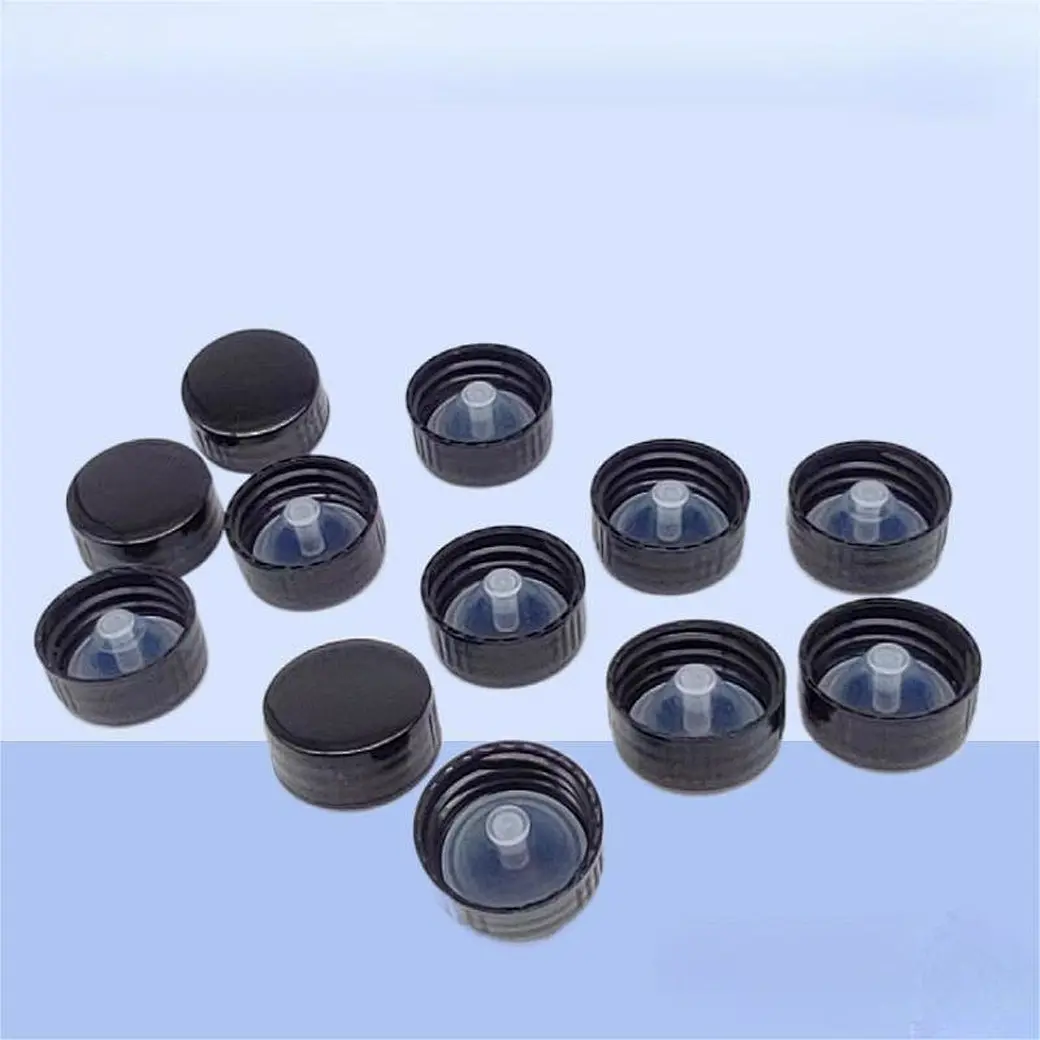
PP has good heat resistance, allowing for sterilization at temperatures above 100°C. Without external force, it remains undeformed even at 150°C. Its embrittlement temperature is -35°C, meaning it may become brittle below -35°C. PE, on the other hand, offers better low-temperature resistance but relatively poor heat resistance. Its embrittlement temperature can generally reach below -50°C, with a minimum of -140°C. Therefore, PP caps are commonly used for hot-fill beverage bottles. PP caps also exhibit better dimensional stability. PE is cheaper than PP, so unless PP is necessary, PE is generally used.
PP plastic refers to polypropylene, a thermoplastic polymer made from propylene monomers. Based on the arrangement of methyl groups, it is classified into isotactic polypropylene, atactic polypropylene, and syndiotactic polypropylene. PE plastic refers to polyethylene, a thermoplastic polymer derived from ethylene. Polyethylene is odorless, non-toxic, has a waxy texture, and offers excellent low-temperature resistance. It is chemically stable, resistant to most acids and alkalis, insoluble in common solvents at room temperature, has low water absorption, and excellent electrical insulation properties.
